
Poe, Forevermore
Edgar Allan Poe’s life was stranger than fiction.

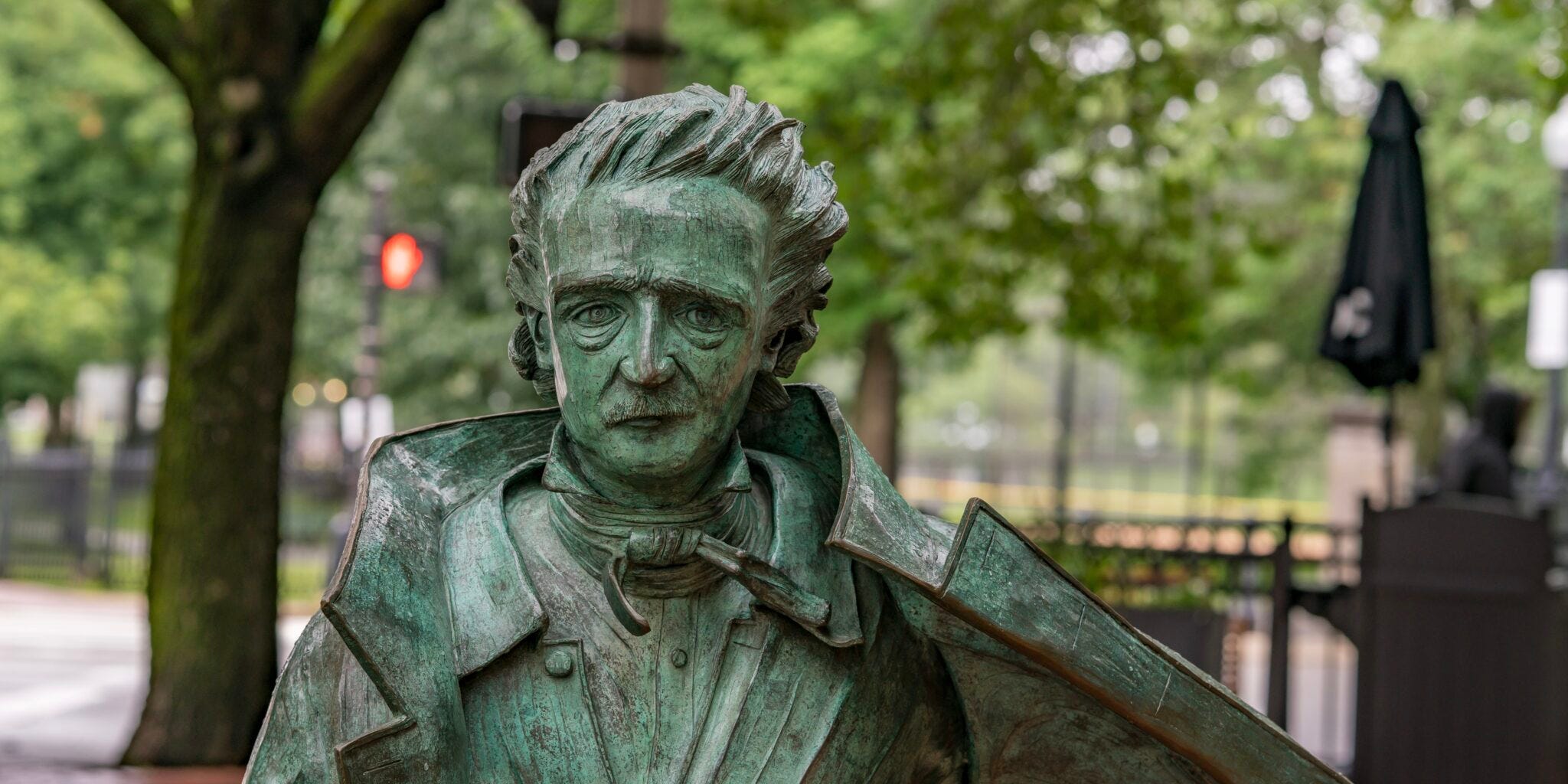
Deep in the dark corners of any artist’s being, there is both myth and reality. The two are intertwined, creating new and different meanings. He himself has the potential to embrace either one or both at the same time, but after death comes for the artist, it is often the myth and the legend that remain alive, while the reality is forgotten and displaced.
Truth is often stranger and more horrific than fiction. The life of Edgar Allan Poe is one of those instances. Poe—the American writer who has left such an indelible mark and impact on American literature and culture; Poe—a child forgotten and abandoned; Poe—the master of horror stories; Poe—the sensitive, melancholic, and tormented alcoholic; Poe—the man who desired order rather than horror and chaos; and Poe—the man who appreciated humor.
There are many sides to Edgar Allan Poe that, unsurprisingly, go beyond the famous daguerreotype photograph of a mustached man, with penetrating eyes and ruffled dark hair. Along with the raven (based on one of his most famous poems, The Raven), that image of Poe is what everyone sees today. Poe is on coffee mugs, magnets, socks, notebooks. He remains popular with both people and scholars.
Beginning with silent cinema, every decade in cinematic history has seen the making of film adaptations of his stories, be it Universal Studios’ films with Bela Lugosi and Boris Karloff, Roger Corman’s Poe cycles, or, even more recently, Netflix’s The Fall of the House of Usher. Poe has captivated us in both his life and death. We cannot look away from his stories of terror because in them we see ourselves, our desires, our frailties. But who is Poe? Has he ever revealed himself? That dark image of Poe is only one small part of the man who gave us the tales of darkness.
Read more in Law and Liberty…